nutrition & agriculture
Growing Food, Growing Knowledge, Growing Futures
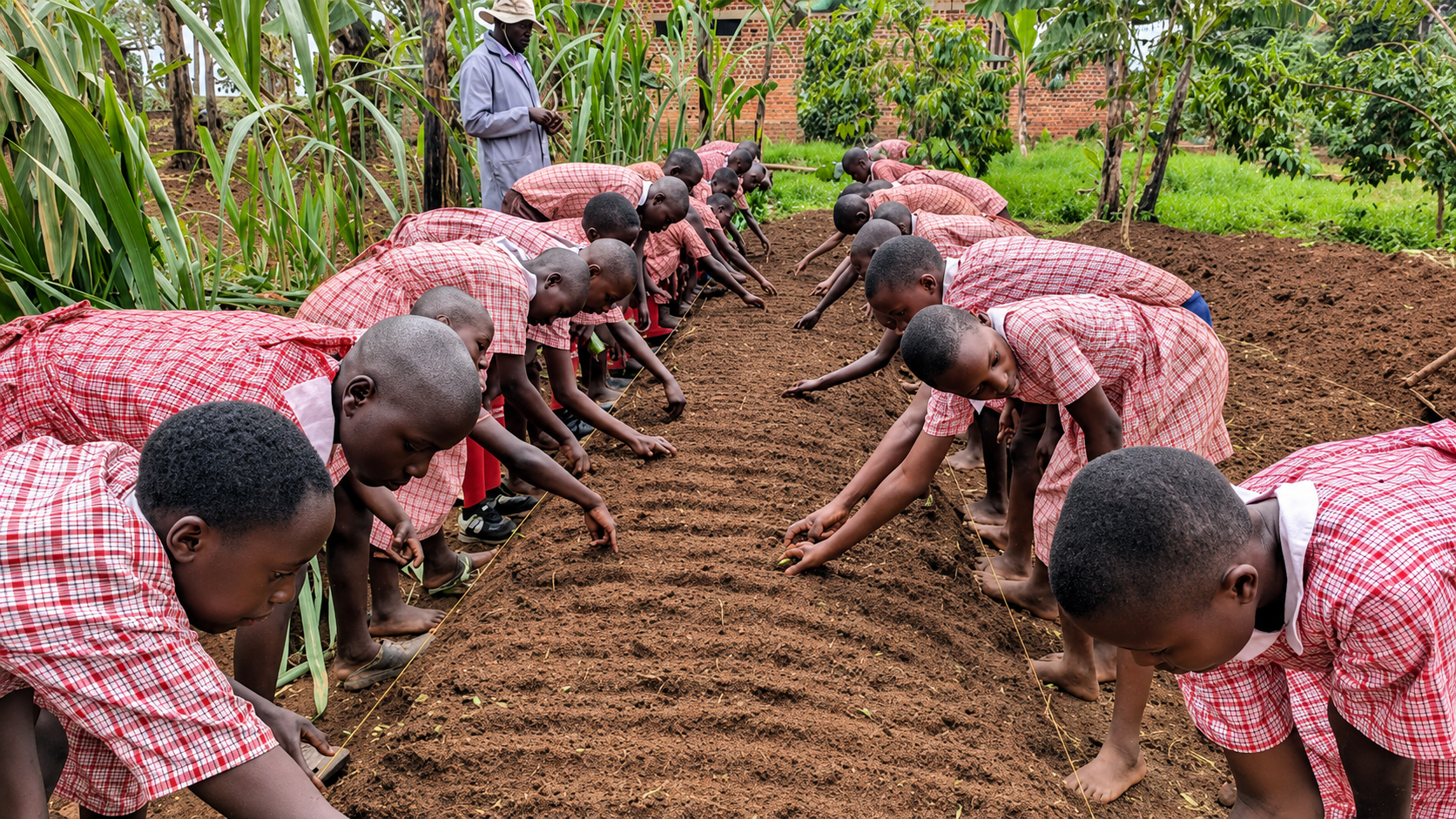
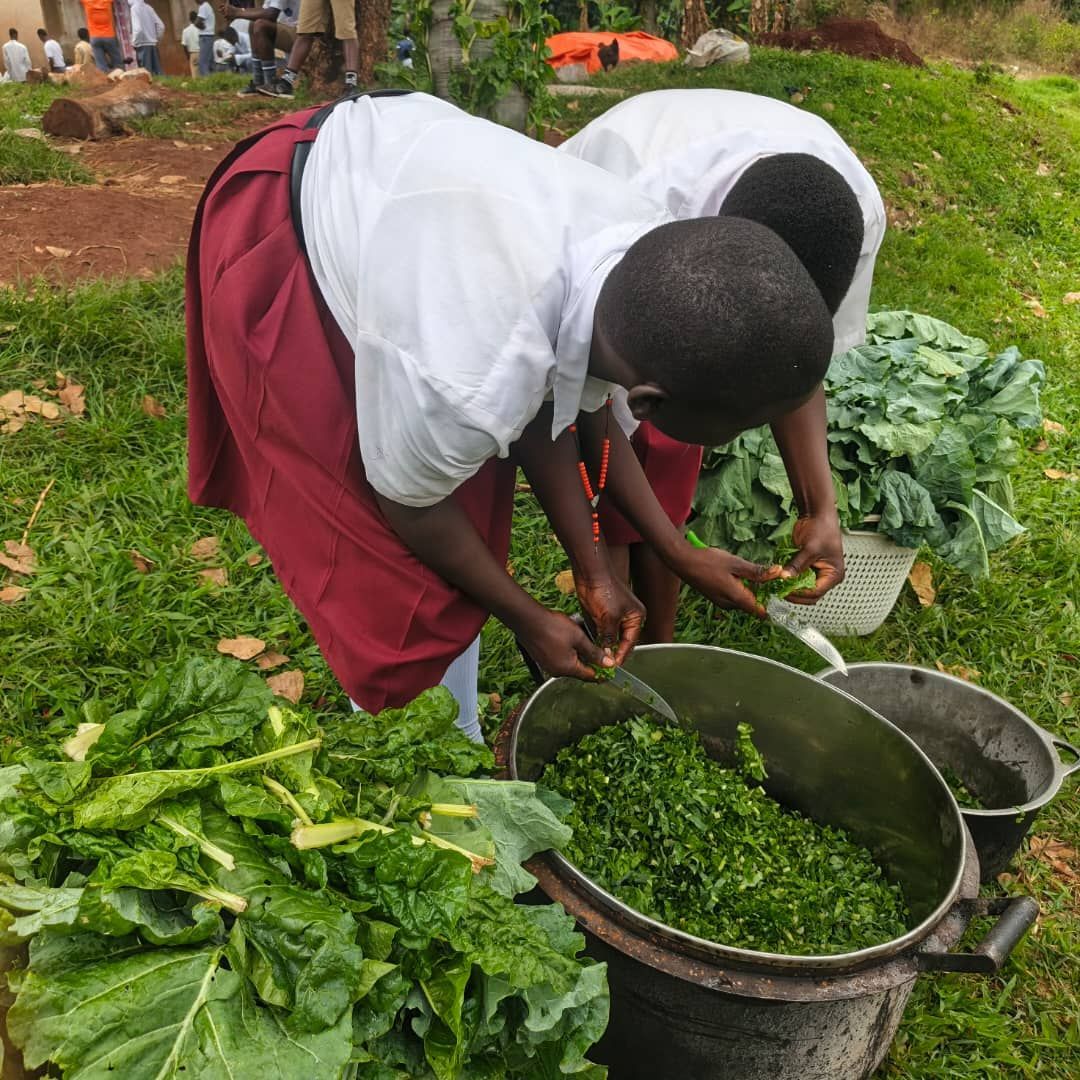
More than one in three Ugandan children under five suffers from stunting — a direct consequence of chronic malnutrition. BKB addresses hunger at its roots: teaching families to grow diverse, nutritious food using sustainable farming practices, and giving communities the knowledge and tools to sustain that change for generations.
Sustainable farming is central to how BKB works. Rather than relying on synthetic pesticides and fertilizers, BKB trains farmers in organic growing methods that use locally available, natural inputs — protecting soil health, reducing costs, and keeping farming viable for the long term. Alongside organic practices, BKB promotes a range of climate-resilient techniques tailored to Uganda's growing conditions: crop rotation, intercropping, water conservation, and staggered planting that ensures continuous harvests rather than a single seasonal yield. Together, these approaches are designed to help families achieve food security in the near term while building the soil health, biodiversity, and agricultural knowledge that will sustain production for future generations. All practices are adapted to the specific climate, nutritional, and cultural context of the communities BKB serves.

Community Teaching Gardens
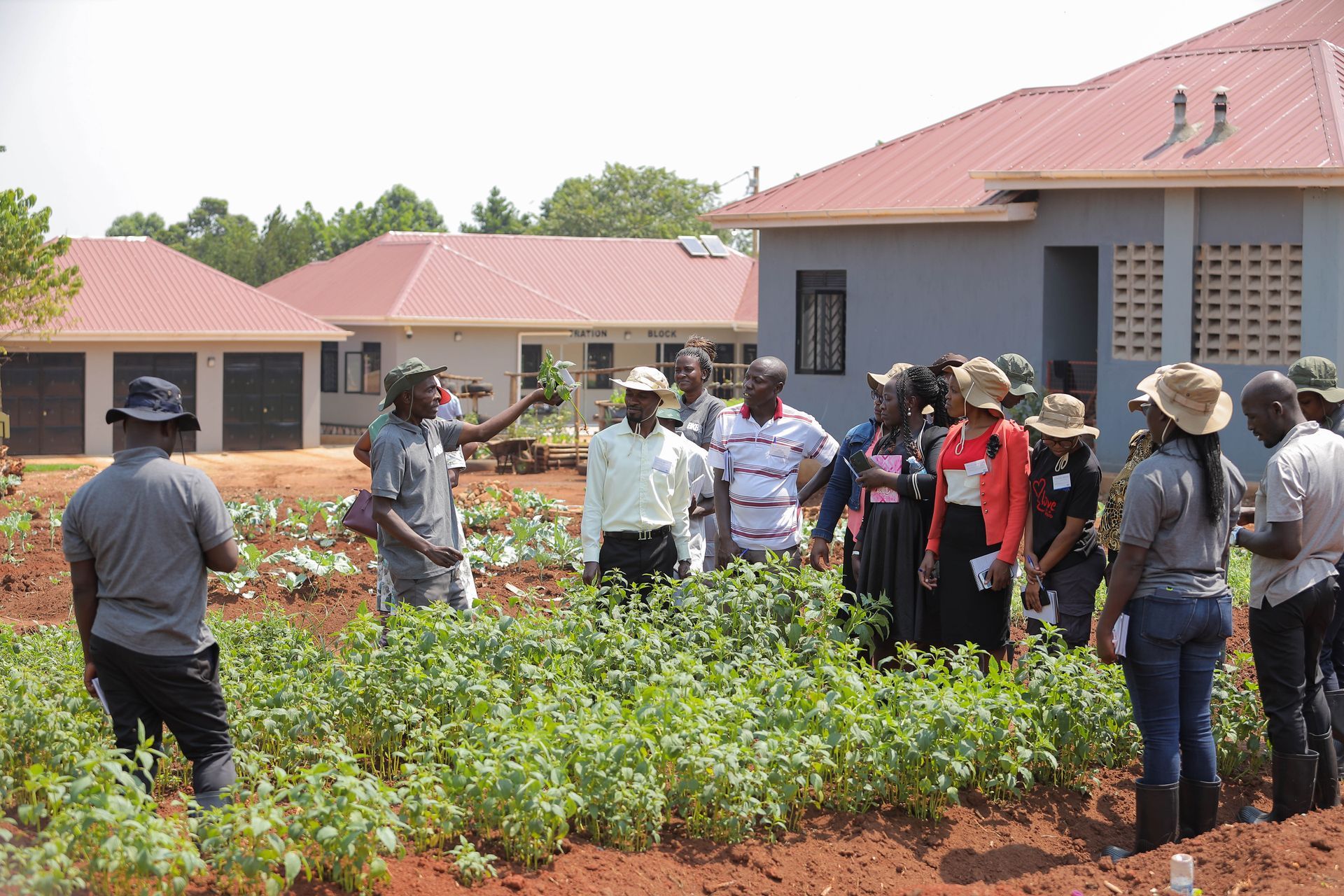
At the heart of BKB's agriculture program are community demonstration gardens — practical, hands-on learning spaces where farmers gather to develop sustainable farming skills they can apply immediately at home. BKB has established 25 demonstration gardens across Uganda. It has trained over 1,600 farmers, who use sustainable farming practices in over 2,322 family gardens across the country.
Farmers learn composting and organic soil management, water conservation, space-saving techniques such as sack gardens and hanging gardens for households with limited land, staggered planting to ensure continuous harvests year-round, and basic livestock care. High-quality seeds are provided so that learning translates directly into practice.
The results are measurable: 1,600 farmers trained, 1,088 new gardens started, and 1,234 family gardens improved.
Central Organic Demonstration Farm
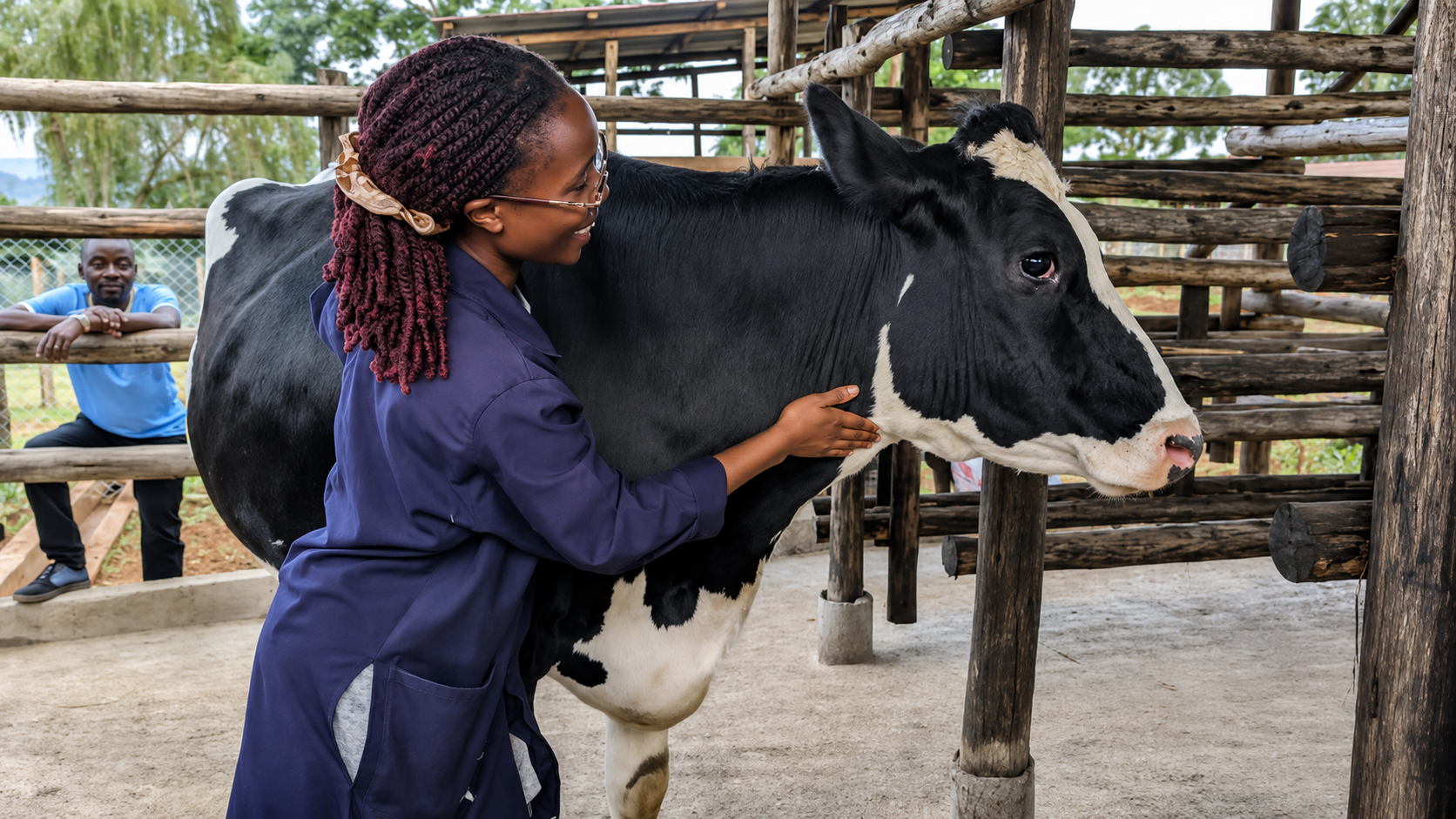
BKB's flagship organic farm is a working model of integrated, sustainable agriculture — featuring crop production through natural inputs, dairy cows, poultry, rabbits, aquaculture, biogas, composting, and irrigation, all aligned with Uganda's national school curriculum. It serves as a training hub for farm managers, school coordinators, and community farmers from across the country. To date, more than 6,363 farmers have visited the Central Farm for training and practical guidance.